
Mold in Sink Drains: Causes, Health Risks, and How to Get Rid of It
Noticing mold in a sink drain can be unsettling. The signs, whether visible as residue or noticeable as an odor, usually indicate trapped moisture and organic buildup. For homeowners, landlords, and property managers in San Marcos and North County San Diego, the concern is not just cleanliness, but whether the issue signals deeper mold in pipes or a developing plumbing problem.
Understanding what causes it and when it requires professional attention can help you avoid ongoing damage and repeated cleanups.
What causes mold buildup?
Mold growth in a drain rarely happens without a reason. It forms when moisture lingers, and organic material accumulates inside the pipe. Every day use contributes more than most people realize.
Typical causes include:
- Residue from soap, grease, or food particles
- Slow drainage that allows water to sit in the pipe
- Infrequently used sinks where water stagnates
- Minor leaks beneath the sink or within the walls
- Poor airflow in enclosed or humid areas
In many cases, what appears to be surface-level mold is actually part of a deeper biofilm coating the inside of the pipe.
Is mold in a sink drain dangerous?
The risk level depends on the extent and location of the growth. Small amounts confined to the drain opening may cause odor, but limited exposure. However, recurring or widespread mold in pipes can contribute to indoor air quality concerns.
People with allergies, asthma, or sensitivities may notice:
- Irritation in the eyes, nose, or throat
- Increased respiratory discomfort
- Persistent musty odors affecting living spaces
According to CDC mold and remediation guidance, exposure levels and conditions can influence how individuals respond. From a property standpoint, visible mold around plumbing fixtures can also indicate ongoing moisture issues. Left unresolved, those conditions can spread beyond the drain area.
How do you remove mold from a drain?
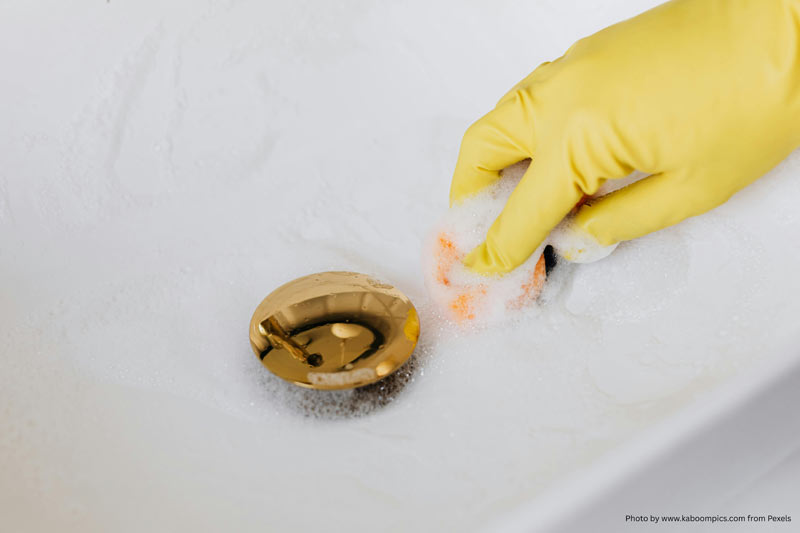
Light buildup can sometimes be handled with routine cleaning. Removing the stopper, scrubbing accessible surfaces, and flushing the line may reduce visible growth. For general safety guidance, refer to EPA mold cleanup guidelines. However, this approach only addresses what you can reach.
When the issue persists, more targeted solutions are needed:
- Professional clogged sink mold removal
- Mechanical drain cleaning to break up internal buildup
- Inspection for hidden leaks or pipe damage
- Targeted plumbing mold remediation for moisture-affected areas
Repeated cleaning without results usually means the source remains inside the system.
When does mold in pipes require professional plumbing service?
Some warning signs point beyond a simple cleaning issue. If you notice patterns rather than isolated incidents, it’s time to look deeper.
Call a plumber if:
- The odor returns quickly after cleaning
- Water drains more slowly than normal
- Moisture or staining appears under the sink
- Multiple drains show similar issues
- You suspect a sewer line or pipe problem
In these situations, mold buildup may be linked to leaks, deteriorating pipes, or sewer-related concerns. A full-service plumbing inspection can identify the root cause and prevent repeat problems.
How can you prevent mold problems?
Prevention comes down to controlling moisture and limiting buildup. Small habits and periodic maintenance can make a noticeable difference.
Effective prevention strategies include:
- Keeping drains clear of grease and food waste
- Cleaning drain components regularly
- Running water in unused sinks to prevent stagnation
- Fixing leaks as soon as they appear
- Scheduling routine sink and drain cleaning services
- Improving ventilation in bathrooms and utility areas
Consistent mold prevention in plumbing focuses on eliminating the conditions mold needs, not just removing what’s visible.
What should property owners in San Marcos do next?
If mold issues keep coming back, it’s worth taking a closer look at the plumbing system as a whole. What starts as a minor nuisance can point to larger concerns like hidden leaks or compromised pipes.
For properties in San Marcos and North County San Diego, a professional evaluation can determine whether you need basic cleaning or more advanced services such as leak detection, sewer repair, or full-service plumbing support.
FAQs
What causes mold in the sink drain to keep coming back?
Recurring mold usually means buildup or moisture remains inside the pipe, often due to slow drainage or hidden leaks.
Is mold in pipes worse than surface mold?
Yes. Mold in pipes can spread through the system and create ongoing odor and moisture issues that are harder to eliminate.
Can I clean mold in the sink drain myself?
You can remove surface buildup, but deeper issues often require professional drain cleaning or inspection.
When should I schedule clogged sink mold removal?
If cleaning does not last or the drain smells and drains slowly, professional removal is recommended.
Does mold in the sink drain mean I have a leak?
Not always, but it can. Persistent moisture and repeated growth are common signs of an underlying leak or drainage problem.
Are sink drain cleaning services necessary for prevention?
They can help prevent buildup and reduce the chance of recurring mold, especially in frequently used or older plumbing systems.
Take Action to Protect Your Home from Mold in Pipes
Mold in sink drains is more than just an eyesore—it signals lingering moisture that can harm your plumbing and indoor air quality. While minor growth can sometimes be cleaned, recurring mold often points to hidden buildup or leaks. For homeowners and property managers in San Marcos and North County San Diego, professional inspection, targeted mold removal, and routine drain maintenance are the best ways to eliminate existing mold and prevent future problems. Acting now protects both your plumbing system and your family’s health, ensuring a safer, cleaner home.